
Vineyard Removal – Sustainability and Innovation in Viticulture
Share
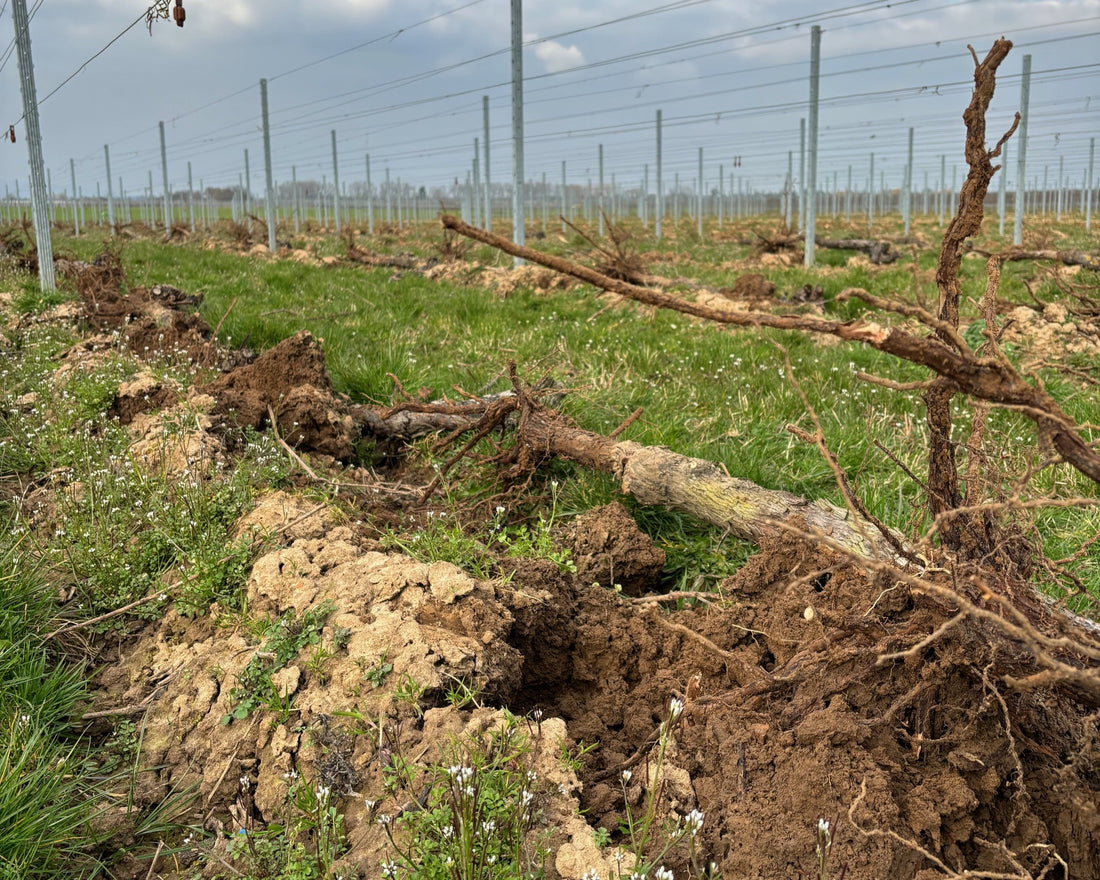
The uprooting of our vineyards is an important process in the care and further development of our vines. For us, this takes place after about 25 to 30 years, when the vines have reached their maximum yield capacity. This year, we pulled each vine individually out of the ground – why might we do that?
Why uproot vineyards?
Grapevines have a natural lifespan, which is influenced by many factors such as climate, soil conditions, and care. After 25 to 30 years, yields usually decrease, vine failures occur, and the vines become more susceptible to diseases. To continue harvesting high-quality grapes, it is necessary to replace older vines with young ones.
Our Sustainable Uprooting – Each Vine Pulled Individually
A crucial feature of our uprooting is that we pull each vine individually out of the ground. This has a practical advantage: we leave our existing wire trellis – the stable framework necessary for the growth of the vines – in place. This means we don't have to renew the entire wire and post framework every time, which saves resources and reduces labor. However, this can also be really strenuous.
The Focus on PIWI Grape Varieties
When choosing the grape varieties we plant, we are increasingly focusing on PIWI grape varieties. These fungus-resistant vines are characterized by higher resistance to diseases, which reduces the use of pesticides and at the same time protects the environment. This allows us to produce wines that taste good and also protect our environment.
Looking to the Future
The combination of a well-thought-out uprooting process and a focus on innovative, fungus-resistant grape varieties strengthens us as a winery and contributes to the further development of viticulture in harmony with nature.
We look forward to planting new vines again in the spring and then watching them grow. However, it takes 2 years for a newly planted vine to bear fruit.
